Perimenopause and menopause are a challenge for most women because of the many different symptoms that appear. Sleeplessness, anxiety and irritability are among the most common, along with changes in the skin that happen within months. If you are in this period of your life, you have probably looked for a solution, or for something to help you manage a symptom that has become hard to bear.
It is worth knowing that the oil-bearing rose Rosa damascena, which we grow in Mirkovo, has been the subject of a number of scientific studies related precisely to menopause and some of its typical symptoms.
Why the rose
People have used the oil of Rosa damascena for centuries – not only for its scent, but for a number of properties with a beneficial effect on the body. Much of this knowledge has been passed down through generations. Some of the plant’s qualities and effects, however, have been studied in controlled scientific research, and the results are worth knowing.
Science is also interested in the composition of rose oil and rose extracts. The rose contains hundreds of aromatic molecules and a whole range of polyphenols and flavonoids. They work on several levels at once: through the scent, on mood; and when taken orally, on emotional balance. It is exactly this depth that attracts researchers looking for natural ingredients that work.
Less anxiety and stress
In 2025, Maturitas – one of the leading scientific journals on menopause – published a trial with 82 menopausal women. Half of them took capsules with 500 mg of Rosa damascena extract twice a day for 8 weeks; the other half took a placebo.
The result: anxiety and depressive symptoms fell significantly in the women who took the rose extract capsules. On the DASS-21 scale, stress dropped from 19.0 to 7.6 points, anxiety from 14.6 to 6.2, and depressive symptoms from 10.1 to 3.9. The difference compared with placebo is statistically significant – the effect is not due to chance. No side effects were observed.
An earlier, similar study carried out in Iran (2021) among more than 100 postmenopausal women reached the same conclusion after 40 days: in the group taking capsules of rose petal powder (500 mg three times a day), anxiety fell significantly, while in the placebo group there was almost no change.
What this means in practice: Rosa damascena extract reduces stress-related symptoms during menopause – less inner tension, a steadier mood and more calm.
More desire and comfort in intimacy
The same research team also followed another aspect of the participants’ lives – libido, measured with the standardised FSFI questionnaire (Female Sexual Function Index). The improvement compared with placebo was visible as early as week 4 and even clearer by week 8 – in desire, arousal, satisfaction and comfort, with less discomfort and pain.
What this means in practice: Intimacy and the changes around it during menopause are rarely talked about, yet they affect the quality of life of many women. The research results here, and the benefits of rose extract, are worth a closer look – especially for women who prefer to rely on natural solutions.
A scent that raises oestrogen
A Japanese study shows something surprising. 15 perimenopausal women, with an average age of about 44, inhaled ten essential oils one after another. Only two of the ten – rose and geranium – raised the level of oestrogen in their saliva.
The explanation lies in our sense of smell. It is the only sense with a direct connection to the limbic system – the area of the brain linked to emotions and hormonal regulation. And although the study is small, it shows once again that the scent of the rose is special and has a measurable effect on processes in the body.
Our experience with products containing rose oil and rose extracts, and what our long-standing customers tell us, give us confidence that these scientific findings are no accident. The Bulgarian rose is a plant of exceptional quality and composition, and it will find ever wider use – not only in skincare and perfumery, but in everyday care for how we feel.
What happens to the skin during menopause
Oestrogen plays a part in collagen production, in holding moisture and in the skin’s protective barrier. When its levels drop, the mirror starts to show the loss of elasticity and more and more new lines, fine and not so fine. The feeling of dryness becomes stronger, and your usual skincare no longer seems to work.
That is why, during this period, the skin asks for more: rich plant oils that nourish it, ingredients that hold moisture, and formulas with nothing unnecessary that could irritate skin that is already sensitive.
The rose can be an ally here too. Its polyphenols protect the skin from oxidative stress, and its scent turns skincare into a ritual – and not only for the skin.
Rose rituals for beautiful skin and a good mood
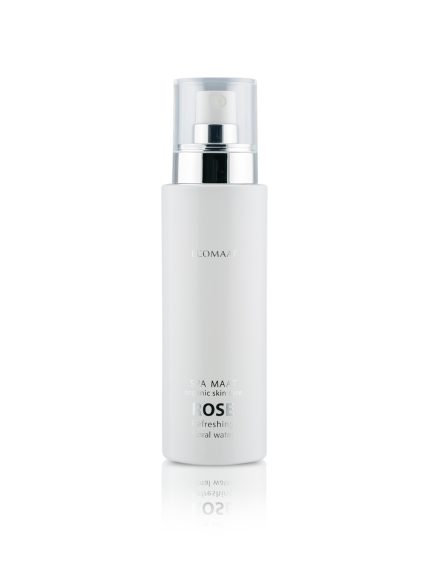
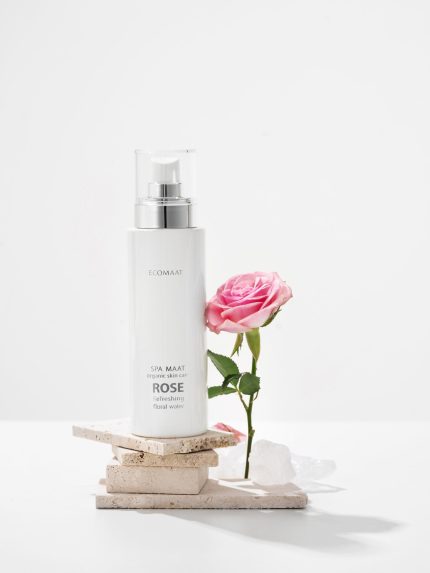
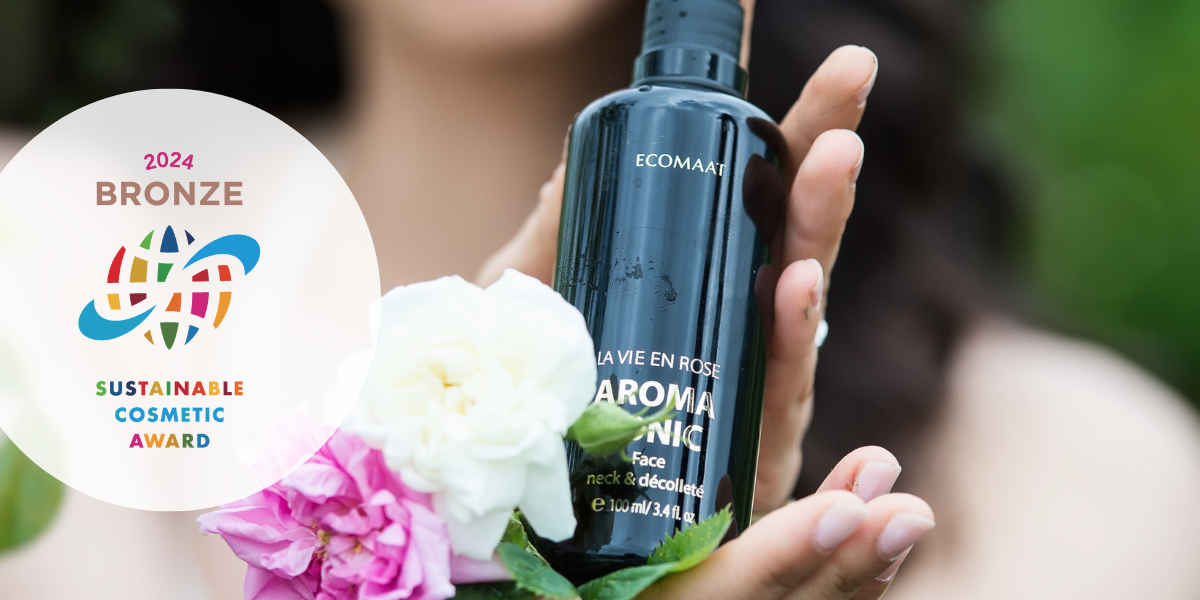
In the morning. Mist your face with Rose Floral Water and, while the skin is still damp, apply three drops of a face oil with rose oil or Rose Face Fluid (with CO₂ extracts of rose and rosehip). This keeps the moisture in your skin, so it stays well hydrated all day, and the authentic scent of the rose puts you in a good mood.
“Morning and evening I mist my face with Rose Floral Water and apply 3 drops of the fluid. I don’t put anything else on my face.” – Vihra, an Ecomaat customer for more than 5 years
During the day. A cup of rose petal tea – caffeine-free, with a soft floral taste. Five minutes in which you do nothing else.
In the months when you spend more time indoors, in heated rooms with dry air, use rose floral water during the day as well, to give your skin extra hydration.
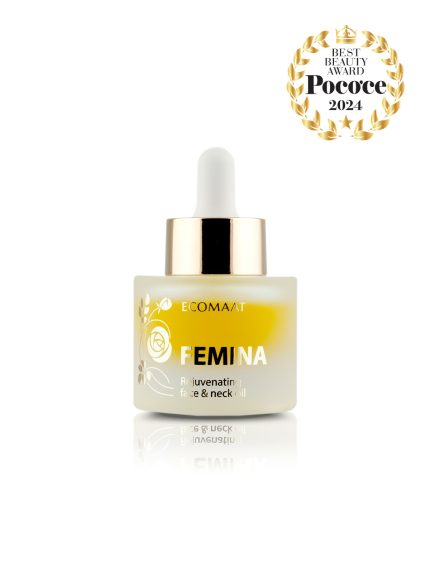
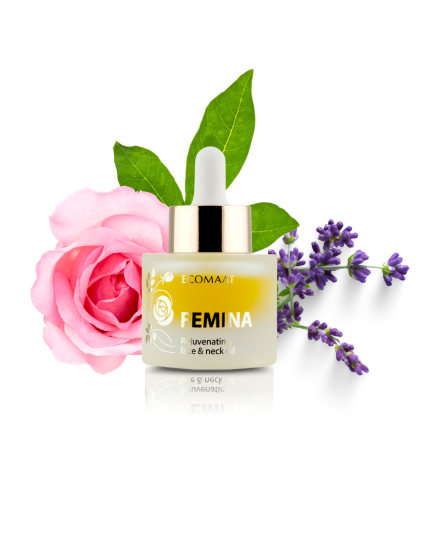
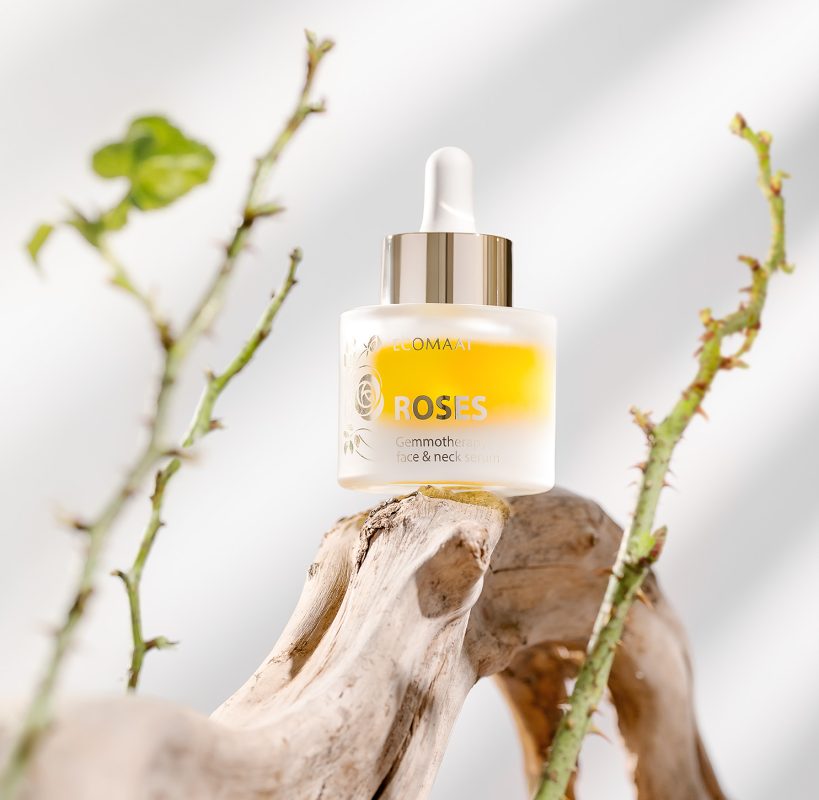
In the evening. Floral water again, then a few drops of rose oil warmed in your palms. Breathe in the scent and apply to your face and neck. This is the moment when scent and skincare work together.
Add a cup of rose petal tea or water with rose drops before bed, put your phone aside, pick up a good book or put on some relaxing music. Let go and enjoy the rest. During the transition it is important to pay special attention to sleep and to create evening rituals that help you fall asleep more easily and sleep more calmly. Because, as we all know, a good night’s sleep shows on your face in the morning.
In short
Rosa damascena is among the natural remedies with data from randomised clinical trials in menopausal women – not just from the laboratory. Its extract reduces anxiety and stress and improves emotional comfort and intimate life, and its scent has a measurable effect in the body.
The rose is the queen of flowers, a symbol of a woman’s authenticity and beauty. Delicate, strong and sensual. With an inimitable fragrance and character. And with a whole spectrum of scents and substances, known since ancient times and studied today. At a time when a woman is changing, the rose can be her ally – and science confirms it.
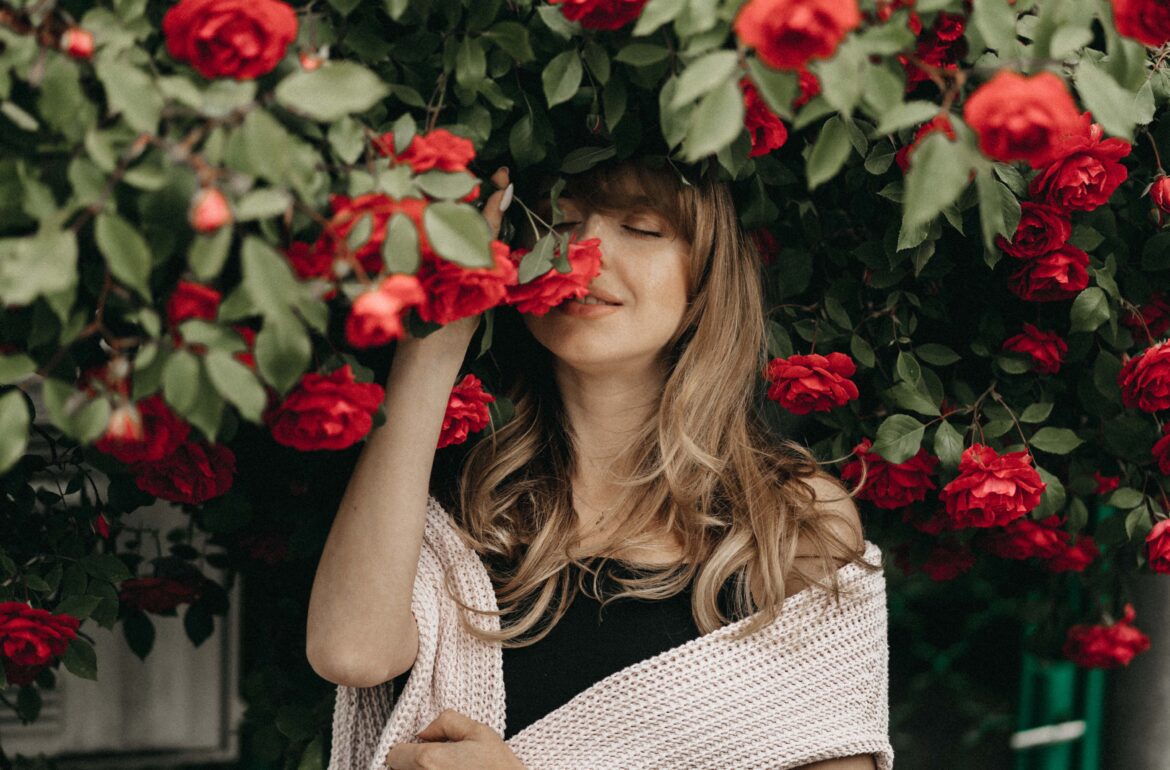
Our roses grow in Mirkovo, at the highest altitude for oil-bearing roses in Bulgaria. We have been growing them for 25 years. We pick them by hand, early in the morning, when the flowers are at their most fragrant. We don’t waste time: we process them straight away and extract oils and extracts by distillation and by cold CO₂ extraction, so that the precious ingredients of the Bulgarian Rosa damascena reach you in our products.
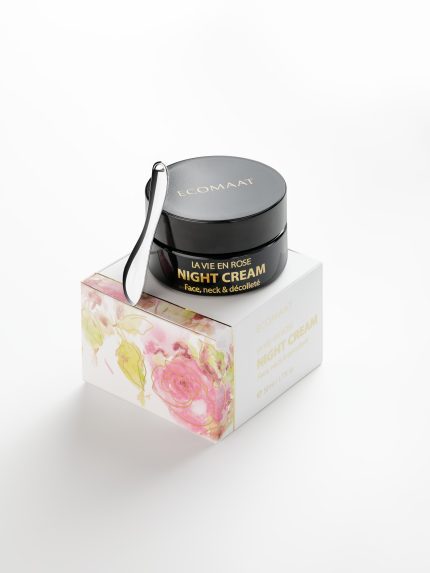
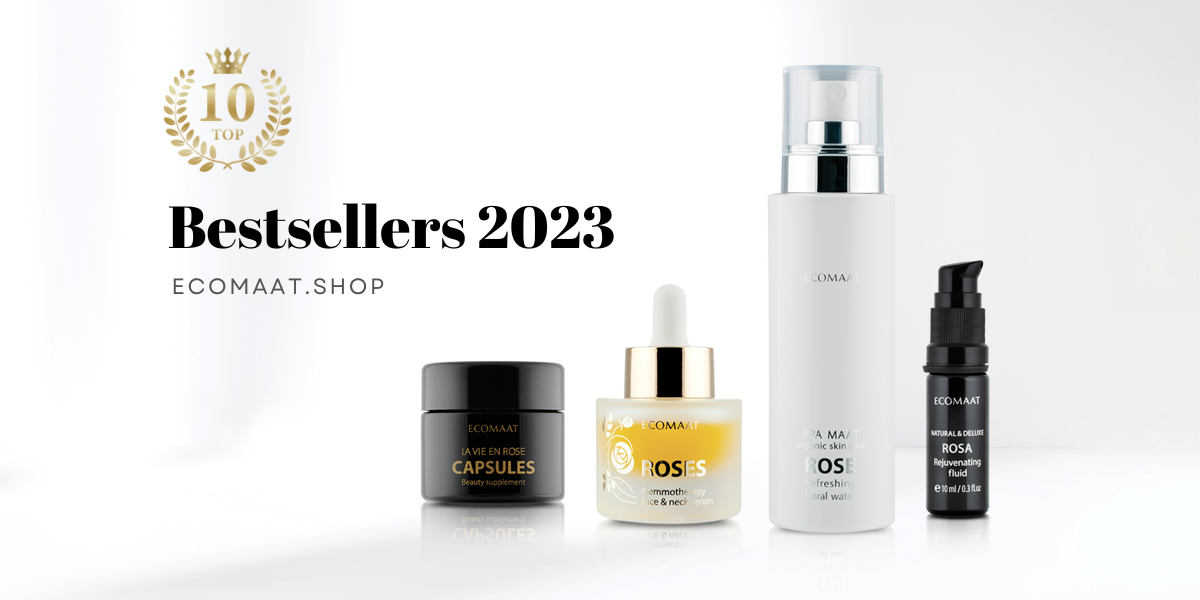
The rose, inside and out – this idea is at the heart of the La Vie en Rose range: tea, drops, capsules and skincare.
Frequently asked questions
Does the rose help with menopause symptoms?
In randomised trials, Rosa damascena extract taken for 8 weeks reduced stress, anxiety and depressive symptoms in menopausal women significantly more than placebo. There was also an improvement in intimate comfort.
Was rose oil or rose extract studied?
The trials in which it was taken orally used an extract or powder of rose petals. Rose oil has been studied by inhalation – read about it in “The scent of the rose: why it works so fast”.
How does the skin change during menopause?
As oestrogen falls, the skin loses moisture and elasticity and becomes drier and more sensitive. During this period it asks for rich plant oils and ingredients that hold moisture.
This article presents published scientific studies on Rosa damascena. They were not carried out with Ecomaat products. This article is not medical advice – if your symptoms make everyday life difficult, talk to your doctor.
Sources
- Gholinezhad Z, Karimi FZ, Rakhshandeh H, Mazloum SR. Effect of oral capsules of Rosa damascena Mill extract on depression, anxiety and stress in menopausal women: A randomized controlled trial. Maturitas. 2025;199:108659. PubMed
- Effect of Rosa damascena on the Severity of Depression and Anxiety in Postmenopausal Women: A Randomized, Double-blind, Placebo-controlled Clinical Trial. Journal of Evidence-Based Care. 2021. Article
- Gholinezhad Z, Karimi FZ, Rakhshandeh H, Mazloum SR. Impact of Rosa damascena extract capsule on the sexual function of menopausal women: A randomized clinical trial. Explore (NY). 2025;21(1):103082. PubMed
- Shinohara K, Doi H, Kumagai C, Sawano E, Tarumi W. Effects of essential oil exposure on salivary estrogen concentration in perimenopausal women. Neuro Endocrinol Lett. 2016;37(8):567–572. PubMed
Read more: “The scent of the rose: why it works so fast, and what science says”
The rose from our gardens
Grown in Mirkovo. Extracted by us.